Nov 11, 2025
How to Scale Your Marketing Without Hiring a Full Team for Hospitality & Travel

Averi Academy
Averi Team
8 minutes

In This Article
Explore how AI-driven automation can enhance marketing efforts in hospitality and travel without the need for a large team.
Updated:
Nov 11, 2025
Don’t Feed the Algorithm
The algorithm never sleeps, but you don’t have to feed it — Join our weekly newsletter for real insights on AI, human creativity & marketing execution.
In the hospitality and travel industry, scaling marketing efforts without expanding your team is now possible thanks to AI-driven automation. Here’s how you can achieve this:
Automated Customer Outreach: AI tools can personalize and send targeted emails, analyze guest behavior, and respond instantly to inquiries, improving conversion rates during peak seasons.
AI-Powered Content Creation: Platforms like Copy.ai can generate high-quality content across formats - emails, blogs, social media posts - while maintaining your brand's voice, saving time and resources.
Campaign Management Automation: AI systems streamline campaign execution, monitor performance, and make real-time adjustments, reducing the need for dedicated analysts.
Choosing the Right Tools: Options include integrated AI marketing workspaces like Averi AI, freelancer marketplaces for project-based needs, and AI point tools for specific tasks like blog writing or email campaigns.
AI marketing not only saves costs but also enables businesses to deliver personalized, timely guest experiences at scale. However, it requires careful setup, data privacy considerations, and human oversight to maintain quality and the personal touch critical in hospitality.
Key takeaway: Leverage AI for repetitive tasks and scalability while reserving human input for strategy and guest engagement. Start small, automate key workflows, and expand gradually to maximize efficiency without sacrificing brand integrity.
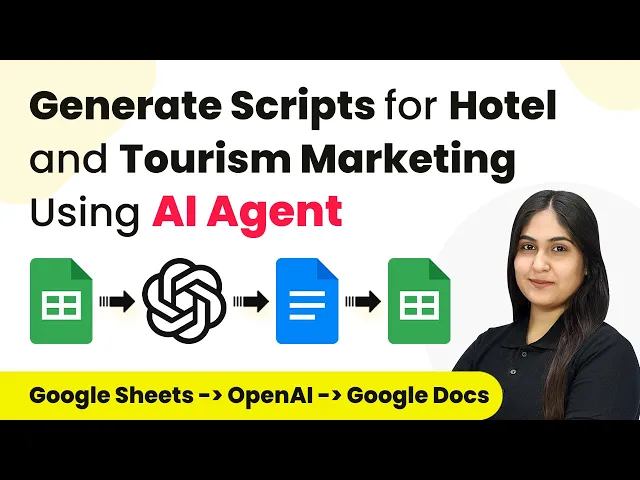
How to Generate Scripts for Hotel and Tourism Marketing Using AI Agent
Main Strategies for Marketing Automation in Hospitality & Travel
The hospitality and travel industries face unique challenges, from the pressures of peak seasons to the unpredictability of last-minute cancellations. Modern AI platforms are stepping in to tackle these hurdles, streamlining key marketing functions like customer outreach, content creation, and campaign management. By automating these areas, hotels, resorts, and travel companies can scale their efforts effectively without needing to expand their teams. Let’s dive into how AI is reshaping these critical functions.
Automated Customer Outreach
AI-powered outreach helps hospitality brands maintain a personal connection with guests while scaling their communication efforts. Instead of manually crafting emails for different guest segments, AI tools analyze booking patterns, preferences, and past interactions to generate targeted, personalized messages automatically.
One of the standout benefits is the ability to respond instantly to potential guests. For example, when someone submits an inquiry or browses a website, AI can quickly enrich their profile with relevant data and send a tailored follow-up message within seconds. This rapid response capability is especially valuable during competitive peak seasons, as it significantly boosts conversion rates.
Dynamic segmentation is another game-changer. AI categorizes guests based on behaviors and spending patterns, triggering communication sequences tailored to each group. After a guest's stay, AI can send thank-you messages, request reviews, and even suggest future travel plans. This level of personalization strengthens relationships while keeping communication timely and efficient.
AI-Powered Content Creation
Creating high-quality content consistently is one of the most time-consuming tasks in hospitality marketing. AI platforms like Copy.ai have revolutionized this process by automating content creation without sacrificing quality or brand identity.
Maintaining a consistent brand voice is essential in the hospitality industry, where trust and reputation directly influence bookings. Tools like Copy.ai include features that define and uphold a brand’s unique tone, ensuring every piece of content aligns with the company’s image.
Ashley Levesque, VP of Marketing at Banzai, highlighted the transformative power of these tools:
"I didn't even know AI workflows were something that I was lacking until someone said, 'Did you know you could do all of this with Copy.ai?'"
AI tools can generate a variety of content formats simultaneously, from SEO-friendly blog posts and social media updates to email templates and landing page copy. Integrated workflows eliminate the need to switch between multiple tools, saving time and effort. Additionally, real-time localization features allow businesses to produce native-level translations instantly, enabling hotels and travel companies to connect with audiences in multiple languages.
Campaign Management Automation
Traditionally, managing and optimizing marketing campaigns required dedicated analysts. AI has changed the game by automating performance monitoring and making real-time adjustments based on data insights.
For hospitality businesses, AI also simplifies the creation of highly targeted marketing assets. Using detailed insights about customer accounts and industries, AI platforms can produce personalized, contextually relevant materials at scale. This capability is particularly useful for Account-Based Marketing (ABM) strategies, allowing businesses to reach diverse customer segments more effectively.
Modern AI platforms integrate seamlessly with existing systems like CRMs, booking platforms, email marketing tools, and social media management software. These integrations enable continuous optimization across all campaigns, ensuring consistent performance and impact.
Features like "Workflows" and centralized "Infobases" further streamline operations. Workflows codify best practices, while Infobases centralize company information to enhance content accuracy and relevance. These tools reduce costs and allow teams to maintain consistent marketing efforts during both peak and off-seasons, freeing up human resources to focus on strategic planning and improving guest experiences.
How to Choose the Right AI Marketing Solution
When it comes to selecting an AI marketing solution, hospitality and travel marketers have three main options: AI marketing workspaces, which blend AI capabilities with human expertise; freelancer marketplaces, where businesses can hire project-based talent; and AI point tools, designed for specific tasks. Each approach caters to varying needs, budgets, and team structures. Here’s how they stack up to help you make an informed choice.
AI Marketing Workspaces (Averi AI)
AI marketing workspaces provide a holistic solution by combining strategy, content creation, and execution into one seamless process. A standout example is Averi AI, which uses its proprietary Synapse system to manage tasks between AI and human professionals. This system operates through specialized cortices - Strategic, Creative, Performance, and Human - that connect users with over 2,500 vetted marketing experts when human input is required.
With everything integrated into one platform, Averi AI eliminates the need to jump between multiple tools. Your brand guidelines, campaign history, and customer insights are all accessible in one place, simplifying your workflow.
One of its standout features is Adaptive Reasoning, which tailors its approach based on task complexity. For example, it can dive deep into strategic planning for seasonal campaigns while quickly handling routine tasks like social media updates. Additionally, its Brand Core feature centralizes your brand voice, guidelines, and customer profiles, ensuring consistency across all marketing materials. When human experts are brought in, they have instant access to your brand’s full context, saving time and avoiding repetitive briefings.
Freelancer Marketplaces
Platforms like Fiverr, Upwork, and MarketerHire offer access to a pool of freelance talent for specific projects. These platforms are appealing for businesses with limited budgets or occasional marketing needs, as they provide specialized skills at relatively low upfront costs.
However, this approach comes with challenges. Each freelancer operates with their own processes and standards, which can make maintaining a unified brand voice difficult. For hospitality businesses, where consistency in branding and guest experience is crucial, this lack of cohesion can be a drawback. Additionally, working with multiple freelancers often requires repeated briefings and coordination, which can offset the cost savings and add to your workload.
AI Point Tools
If you’re looking for tools that excel at specific tasks like content creation, Jasper and Copy.ai are popular choices. These tools are user-friendly and deliver quick results, making them ideal for teams just starting with AI marketing.
However, they come with limitations. Using separate tools for tasks like blog writing, email campaigns, and social media can lead to what’s often referred to as "tool fragmentation." This means managing a scattered array of solutions that don’t communicate with each other, making it harder to execute multi-step campaigns. Furthermore, many point tools lack integration with key systems like booking platforms or CRMs, which can hinder personalization efforts - a critical component in the hospitality industry.
AI Solutions Comparison Table
Factor | AI Marketing Workspaces (Averi AI) | Freelancer Marketplaces | AI Point Tools |
|---|---|---|---|
Delivery Model | Integrated AI + human execution | Project-based talent matching | Self-serve AI generation |
Pricing Structure | Subscription-based, tiered plans | Varies by project (hourly or per-project) | Subscription-based, affordable for single tasks |
Quality Control | Built-in brand consistency | Depends on freelancer performance | Consistent for specific tasks |
Integration Capabilities | Seamless platform integrations | Requires manual coordination | Limited, often tool-specific |
Scalability | High - supports growth and complexity | Medium - managing multiple freelancers | Low - requires multiple tools |
Time to Results | Quick setup with ongoing context | Variable, depends on freelancer availability | Immediate for simple tasks |
Best For | Businesses needing scalable, consistent marketing | One-off projects or teams with dedicated management | Simple, repetitive content tasks |
The right choice depends on your business’s size, goals, and resources. Growing hospitality brands handling complex campaigns often benefit from a unified workspace like Averi AI, which combines AI efficiency with human expertise. On the other hand, smaller businesses or those with straightforward needs might find point tools or freelancer marketplaces a more practical starting point.
Step-by-Step Implementation Guide for AI Marketing Automation
AI marketing automation transforms how businesses engage with customers, but success lies in taking a structured approach. Start with a solid foundation and gradually add advanced features to maximize results.
Setting Up Your Brand Core
Your brand core serves as the blueprint for all AI-generated content. It defines how your brand communicates and ensures consistency across every interaction.
Begin by defining your brand voice and personality within your chosen AI platform. Think beyond basic demographics - capture the essence of how your brand speaks. For instance, a boutique hotel might highlight personalized service and local charm, while a budget-friendly travel brand could focus on affordability and adventure.
Document your brand guidelines meticulously. Specify your tone, preferred terminology, and any language to avoid. For example, a luxury resort might refer to its clientele as "guests" rather than "customers" and describe offerings as "curated experiences" instead of "activities." These finer details ensure AI-generated content aligns with your brand identity.
Develop detailed customer personas that go beyond age or income. Include insights like travel motivations, booking habits, and communication preferences. For example, a business traveler might value efficiency and reliable Wi-Fi, while a family vacationer might prioritize safety and kid-friendly amenities.
Many AI platforms, such as Averi AI, provide tools to centralize this information - often in a feature called a Brand Core. This ensures all content reflects your unique voice and resonates with your audience. Once your brand identity is firmly established, you can shift focus to customer journey automation.
Building Automated Customer Journeys
With your brand core in place, the next step is automating key touchpoints in the customer journey. The aim is to deliver personalized, human-like interactions at every stage.
Start by mapping out your customer journey stages. In the travel and hospitality industry, these typically include awareness, consideration, booking, pre-arrival, on-property experience, and post-stay follow-up. Each stage presents unique opportunities for tailored messaging and automation.
Automate lead processing to respond instantly to inquiries. For instance, when a potential guest fills out a form or downloads a travel guide, your AI system can enrich their profile with available data and initiate personalized follow-ups. Quick engagement is crucial in an industry where booking decisions are made rapidly.
Set up segmentation rules to categorize prospects and guests based on their actions and preferences. For example, a traveler booking spa services might receive wellness-focused content, while someone opting for adventure tours could get updates on outdoor activities and local exploration.
Design trigger-based campaigns that respond to specific actions. For instance, when a guest books a stay, they can enter a pre-arrival sequence featuring local recommendations, check-in details, and upsell options for room upgrades or experiences. Post-checkout, they can transition to a follow-up series that encourages reviews, highlights loyalty program perks, and promotes future visits.
Keep these interactions personal and timely. Leverage collected data to fine-tune messages, timing, and offers for each segment, all while reinforcing your brand's unique voice through automation.
Content Creation and Publishing Workflows
Once customer journeys are automated, focus on streamlining your content production. A smooth workflow ensures a steady stream of high-quality marketing materials.
Create content templates for recurring formats like blogs, social media posts, email newsletters, and landing pages. Templates save time and ensure consistency, whether you're promoting seasonal offers or highlighting local attractions.
Leverage AI for quick content generation across multiple formats. Modern AI tools can draft blog posts, social media captions, email subject lines, and ad copy in minutes. The key is providing clear guidance on your brand voice and audience to produce drafts that require minimal editing.
Implement collaborative editing workflows that combine AI speed with human judgment. Platforms like Averi AI allow teams to brainstorm, draft, and refine content within a single interface, reducing inefficiencies and keeping all contextual details in one place.
Establish approval and publishing processes to maintain quality. AI can generate drafts, but team members should review, edit, and approve content before it goes live. Automating the final publishing step ensures timely updates across your website, social media, and email platforms.
Build a content library to store your top-performing pieces. Save standout content as templates or references for future campaigns, making it easier to replicate success.
Benefits and Drawbacks of AI Marketing for Hospitality & Travel
As we dive deeper into AI marketing strategies, it's crucial to weigh its advantages and limitations for hospitality and travel businesses. While AI-driven tools offer exciting opportunities for efficiency and personalization, they also come with challenges that demand careful consideration. Understanding these dynamics helps businesses make smarter decisions and set realistic goals.
One of the most appealing advantages is cost savings. By eliminating hefty agency fees for tasks like content creation, email campaigns, and social media management, businesses can allocate resources more effectively. AI platforms can generate content drafts in seconds, allowing businesses to quickly adapt to market shifts, such as trending destinations or updated travel restrictions. This speed ensures messaging stays relevant across all channels.
Another game-changer is scalability. With AI, a single marketing manager can oversee campaigns across multiple properties, languages, and guest segments. AI handles the heavy lifting of tailoring messages, whether for business travelers, families, or leisure guests, without requiring separate teams for each audience.
Personalization is where AI truly shines. By analyzing booking patterns, preferences, and behaviors, AI can deliver hyper-targeted content on a large scale. For instance, a resort could send tailored promotional emails to spa enthusiasts, adventure seekers, and corporate retreat planners - all from one campaign setup.
However, these benefits come with challenges. Implementation complexity is a common hurdle. Setting up AI systems requires a significant investment of time and effort upfront. Businesses often underestimate the work needed to configure brand guidelines, define customer personas, and automate workflows. Without proper training, early AI outputs may feel generic or off-brand.
Another pressing concern is data privacy. Hospitality businesses handle sensitive guest information, and AI platforms need access to this data to perform effectively. This increases compliance responsibilities under regulations like GDPR and CCPA. Businesses must thoroughly vet AI vendors to ensure data is stored and managed securely.
AI also struggles with the human touch - a critical aspect of hospitality. While AI can craft optimized emails, it often lacks the warmth and personality that make guests feel truly valued.
Quality control is another challenge, especially at scale. AI can churn out high volumes of content, but ensuring that all outputs align with the brand's voice and maintain accuracy requires ongoing oversight. Without it, businesses risk publishing robotic or error-filled content that could harm their credibility.
Benefits vs. Drawbacks Comparison Table
Benefits | Drawbacks |
|---|---|
Cost Efficiency: Reduces agency fees and staffing needs for routine tasks | Setup Complexity: Significant time investment needed to configure and train systems |
Speed: Quickly generate content to respond to market changes | Data Privacy: Greater compliance responsibilities and guest concerns about data usage |
Scalability: Manage campaigns across multiple properties and segments efficiently | Quality Control: Risk of errors or off-brand content without proper oversight |
24/7 Operation: Automates responses and nurtures leads around the clock | Human Touch: Lacks the emotional warmth critical in hospitality |
Personalization at Scale: Tailors content for diverse guest segments simultaneously | Dependency Risk: Over-reliance on AI can leave teams unprepared for manual interventions |
Consistent Messaging: Automatically maintains brand voice across channels | Learning Curve: Staff need training to use and integrate AI tools effectively |
A balanced approach is key. Combining AI's efficiency with human oversight ensures the best outcomes. Leading hospitality and travel businesses use AI to handle repetitive tasks and scale their efforts, while reserving human input for strategic decisions and guest interactions that require empathy and emotional intelligence. Jean English, Former Chief Marketing Officer at Juniper Networks, highlighted the transformative potential:
"Thanks to Copy.ai, we're generating 5x more meetings with our personalized, AI-powered GTM strategy." [1]
Ultimately, the effectiveness of AI marketing depends on your business size, technical readiness, and guest expectations. Rather than replacing human expertise, AI works best as a tool to complement and enhance it.
Conclusion: Key Takeaways and Next Steps
In today’s fast-moving hospitality and travel landscape, scaling your marketing efforts without a full team isn’t just an advantage - it’s a necessity. The answer lies in smart automation that eliminates the inefficiencies of juggling multiple tools.
Take the example of Averi AI. By offering a unified workspace, it eliminates what industry insiders call "GTM bloat" - that frustrating productivity drain caused by switching between ChatGPT for strategy, Google Docs for content, Photoshop for visuals, and endless email threads with freelancers. Instead of fragmented tasks, you get streamlined execution, setting the stage for more focused and actionable marketing strategies.
Automation powered by AI delivers tangible benefits, like drafting content in seconds and instantly processing inbound leads. This speed becomes your edge, especially in an industry shaped by seasonal swings and shifting trends. For hospitality businesses, being responsive can mean the difference between securing bookings or losing them to competitors.
Another game-changer is AI’s ability to handle real-time translation and localization. This capability eliminates the need for costly agencies, opening doors to global markets. Whether you’re a travel business targeting international travelers or a hospitality brand catering to multilingual guests, this kind of flexibility is invaluable.
The key to success lies in choosing the right tools. Comprehensive platforms like Averi AI combine AI’s speed with the option for human expertise, offering everything from strategic planning to content creation in one seamless system. On the other hand, freelancer marketplaces can work for one-off projects but often require more oversight, while AI point tools are cost-effective but can lead to integration headaches as your needs grow. With these options in mind, take a hard look at your current processes to pinpoint where automation can have the biggest impact.
Start by evaluating your marketing workflow. Identify bottlenecks - whether it’s content creation, lead nurturing, or campaign management - and focus on automating the most time-consuming, repetitive tasks first. For many businesses, this could mean automating email sequences for new bookings or generating social media content with AI. Once you’ve nailed one workflow, expand gradually to other areas. This step-by-step approach keeps implementation manageable and builds confidence in your new system.
The hospitality and travel sector thrives on delivering personalized experiences at scale. AI-driven marketing automation equips you to do just that, without requiring massive resources. By adopting these tools now, you’ll stay ahead of competitors already leveraging AI to grow faster and operate more efficiently.
FAQs
How can AI-powered marketing tools deliver personalized customer experiences in hospitality and travel without losing the human touch?
AI-powered marketing tools have transformed how businesses approach personalization. By analyzing customer data, these tools create tailored experiences, such as personalized travel suggestions or specific promotions that resonate with individual preferences. Beyond that, they simplify workflows by automating tasks like content creation, customer outreach, and campaign management, allowing businesses to deliver relevant messages on a large scale without losing focus on quality.
However, keeping the human element intact is crucial. AI excels at handling repetitive tasks, but the creative and strategic decisions are best left to your team. For instance, platforms like Averi AI blend the efficiency of AI with human oversight. This combination ensures that your brand voice remains consistent and authentic, creating a seamless and genuinely personal experience for customers.
What should I consider to ensure data privacy when using AI tools in marketing?
When incorporating AI tools into your marketing strategy, protecting data privacy should be a top priority. Start by confirming that the tools you use align with applicable data protection laws, such as GDPR or CCPA, depending on where your audience is located. It's also essential to ensure the AI provider implements strong security measures like encryption and secure data storage.
Pay close attention to how customer data is gathered, processed, and stored. Whenever possible, rely on anonymized data to reduce risks, and restrict access to sensitive information to only those who absolutely need it. Additionally, establish clear agreements about who owns the data shared with the AI tool. This step is vital for safeguarding your intellectual property and preserving customer trust.
To stay ahead, routinely review and update your privacy practices. This will help you keep pace with changing regulations and advancements in technology.
How can a hospitality business choose between AI marketing workspaces, freelancer marketplaces, and AI tools for their marketing needs?
To find the best fit for your hospitality business, start by assessing your unique needs, budget, and the capacity of your team. Different solutions cater to different priorities, so it’s important to match the tool to your goals.
AI marketing workspaces are a solid choice if you’re after an all-in-one platform that blends automation with human input. These tools are designed to streamline workflows and offer room for growth, making them a great option for businesses aiming to scale efficiently.
For more specific, short-term needs, freelancer marketplaces like Fiverr or Upwork provide access to specialized skills without the need for long-term commitments. These platforms are ideal for project-based work, allowing you to tap into expertise as needed.
On the other hand, AI point tools such as Jasper excel at handling targeted tasks like content creation. While they can save time, they often require more manual effort and additional integration to fit seamlessly into your operations.
When weighing your options, think about factors like cost, user-friendliness, how quickly you need results, and the level of customization your business demands. If scalability and efficiency tailored to your industry are top priorities, AI marketing workspaces could be your go-to. For tighter budgets or one-off tasks, freelancer marketplaces or specific point tools might suit your needs better.